
It’s tax season. So do you like how your tax dollars are being spent?
Many Americans don’t.
As of early April 2026, the Iran war has cost United States taxpayers over $42 billion, including $1 billion per day.
To put that into local perspective, the entire 2026 budget for Minneapolis is $2.03 billion. In other words, roughly two days of war spending equals a full year of running our city. Every core city service, including police, fire, 911, and road repairs, comes from that pool.
If even a fraction of those billions spent far from home were reinvested locally, imagine what could be done for infrastructure, housing support, mental health services, and quality‑of‑life programs for all residents.
It’s easy to dissociate distant wars from our everyday lives. Tehran is 6,500 miles from Minneapolis. But that's closer than we think.
Because we’re paying for it. Grocery prices, gas costs, and inflation rise with global instability. These forces strain local budgets. Everything is connected.
Nearly a century ago, a decorated Marine general named Smedley Butler tried to warn us.
After over 30 years in the military, he wrote "War Is a Racket," published in 1935. Butler explained how war serves economic interests more than human ones.
He argued that corporations and special interests profit from war, while ordinary citizens pay the real price through taxes, lost lives, and untold hardships for families and communities.
"War is just a racket," he wrote, noting a system that looks noble on the surface, but that in reality funnels human suffering for the benefit of a powerful few.
In Butler’s day, the military‑industrial entanglement was just beginning. Today, it is a global network influencing budgets, priorities, and our sense of what public purpose really means.
His warning was personal. He lived it, and it still echoes today.
This isn’t about left or right. Democrat or Republican.
It’s about priorities. It’s about people. It’s about whether we are investing in life or destruction.
Many Americans are struggling with the basics: housing, healthcare, childcare, safety. Locally, we see it every day.
In neighborhoods like Uptown, residents have been dealing with open-air drug use, homelessness, and public safety concerns.
People spoke up. They asked for help. And for a while, it felt like nothing was happening.
Then something changed. After Southwest Voices published a story in early March spotlighting the crisis, a response followed.
City presence increased. Law enforcement stepped up. Dozens of citations were issued, arrests were made, and local observers reported a noticeable drop in loitering and violent activity on Uptown streets.
That didn’t happen because of national politics or presidential decrees. It happened because local voices were heard, and local leaders felt the pressure and responsibility to act.
Publisher Tesha Christensen put it simply: "We push for change—and it happens."
That’s not theory. That’s proof. And it shows something powerful. Change doesn’t always start at the top. Sometimes, it starts on your block with a story.
We live in a time when trust in government, media, institutions, and even each other is at historic lows. But trust isn’t rebuilt through speeches. It’s rebuilt through action. Through listening. Through showing up.
That’s where community journalism comes in. Not just reporting problems, but helping solve them. Not just informing people, but connecting them. Not just telling stories, but changing outcomes.
There is still work to be done.
As one community member said about the Uptown issues, "The people who were loitering did not get any social services, help with their addictions, or housing. They just moved somewhere else and will be a problem at another location, to be determined."
We can raise local issues that matter, hold leaders accountable, share solutions, and work together across differences. That’s how real change happens.
This is why we’re launching a community survey at bit.ly/MPLSVoices. We want to hear from you. What issues in Minneapolis need more attention? What problems are being ignored? What solutions should be explored?
Our goal isn’t just to report the news. It's to strengthen the community. Global change depends on local action. When communities are strong, informed, and engaged, everything else shifts.
We are all human. That’s the starting point. It’s the solution, too.
If we can show our humanity across neighborhoods and local differences, we can start to make better decisions. About how we treat each other, how we spend our resources, and what kind of future we want to build.
So this tax season, ask yourself: Are we investing in what matters? If not, what can we do about it?
We can't change the world overnight. But together, we can change something.
And that’s where everything begins.
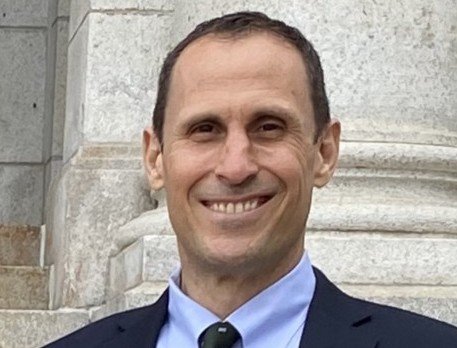
Eric Ortiz lives in the Wedge with his family. He is executive director of the Strong Mind Strong Body Foundation, a national youth and community development nonprofit based in Minneapolis, and associate director of research for The Pivot Fund, a venture philanthropy organization that invests in community newsrooms serving underserved communities.



Comments
No comments on this item Please log in to comment by clicking here