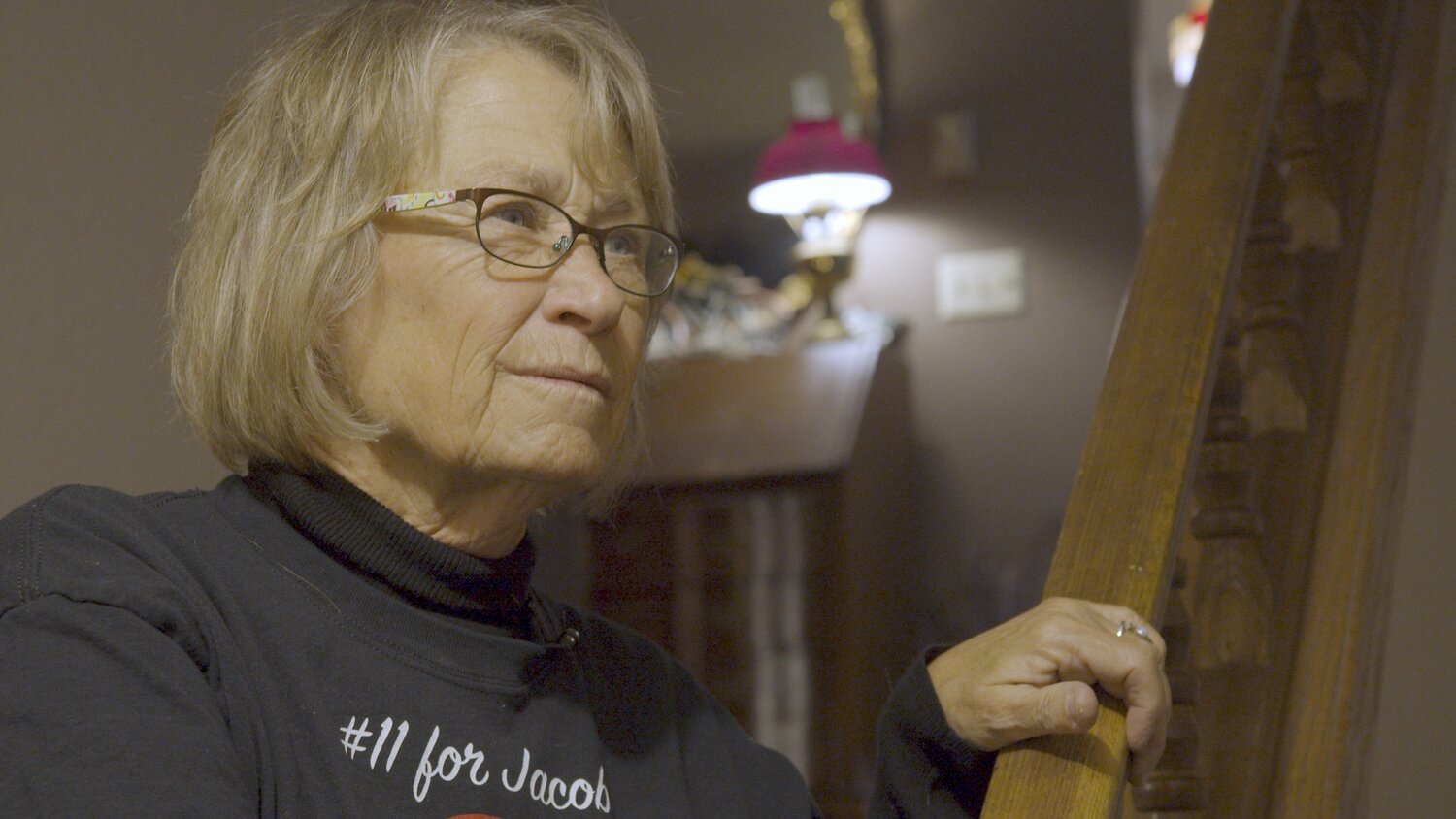


The official documentary of the Jacob Wetterling case, “Echoes in the Night,” will be a highlight of the Minneapolis St. Paul International Film Festival (MSPIFF) April 8-19. Most of the films will be shown at the Main Cinema, 115 SE Main St. in Minneapolis.
Jacob was 11 when he was abducted in October 1989 while riding his bike with his brother and friend. His disappearance went unresolved for nearly 27 years until the arrest of Danny Heinrich in 2015. Jacob’s body was found 10 months later when Heinrich confessed.
The story of his abduction had resonated across the country, even drawing international attention. The search for Jacob and the perpetrator was ongoing.
Chris Newberry, who directs the film, said he became interested in pursuing this subject around 2014, the 25-year mark since Jacob’s disappearance. “This story had affected me a lot,” Newberry recalled. He said that in 2014, he picked up on the fact that there seemed to be a new awareness campaign about the case. “They were trying to shake loose some answers, and I realized this could be my next project.
“I got this germ of an idea, and eventually I was sitting across from Patty Wetterling, Jacob’s mom, to discuss it.” Newberry and his film crew started filming in 2015 on the same week that Heinrich was arrested.
“Every documentary is a little different,” Newberry said. “In the end, this one was a pretty good mix of archival research, a lot of news footage and other video materials that were not ever broadcast on TV.”
He also captured moments in real time.
“I have been working on this film for 10 years,” Newberry said. ”It can feel like you are embedded with the family. There are many, many hours of footage on the cutting room floor. I spent many weeks with the people at the center of the story and lots of weeks doing archival research.”
Newberry said his approach to making a documentary is to get to know and develop a trust with the people he will film. “I try to form a connection. I want them to trust me to tell their story,” he said.
In filming and interviewing for a documentary, Newberry said he thinks it may be impossible to be entirely objective. “But those of us who have a moral compass dialed in strive to be as objective as we can. To be honest, once you know people pretty well, you form friendships. This might guide you to want to explore their good traits a bit more.”
Newberry said a “warts and all approach” is one way of making a biographical documentary. “This film has several of those people,” he noted. “I was not working with the perpetrators of the bad stuff. It is hard to root for them, and that might color the story a little bit. But I do strive for objectivity as much as possible.”
Newberry said that the most challenging part of film making can depend on what day it is. “I think the hardest part with ‘Echoes in the Night’ has been the process of cutting and editing. There is so much rich material that ended up on the cutting room floor.”
Newberry said that having to reduce screen time or in some cases exclude people from the film entirely was very difficult for him. “These were people I interviewed and got to know,” he said. “I feel bad they gave me their time and opened up their intimate lives to me, and I couldn’t find a way to include them due to keeping the film in the confines of feature length.”
DISCOVERING HIS VOICE
Although Newberry has by now completed many films, he did not start out to be a documentary filmmaker. He grew up in Minneapolis and went to Northwestern University in Chicago to pursue a degree in computer science. “But I hung out with kids in the film program and eventually took some film classes. I discovered my voice as a filmmaker,” he said. After Northwestern, he returned to Minneapolis and made some short narrative films. He then attained a Master of Fine Arts from Goldsmith College, a part of the University of London system. He now focuses on documentary film making.
“I started my film career midway through my computer science studies,” he noted. “However, I think I always had an instinct that I wanted to work in film. When I was a kid, I played around with the home movie camera and always tried to do projects in school that required video.”
Reflecting once more on his documentary about the Jacob Wetterling case and its aftermath, Newberry said that he holds a great reverence for the people in his film.”They have been through some incredible, traumatic experiences that 99 percent of us can only imagine,” he said. “Each one has been so resilient, and I am lucky to have been given a glimpse into their world.”



Comments
No comments on this item Please log in to comment by clicking here